Bureau 1440 launches second batch of Rassvet broadband satellites
Bureau 1440
Per RussianSpaceWeb: Bureau 1440 launched a second 16-satellite Rassvet batch; only 9 of the 16 have begun raising orbit as of early August.
what happened
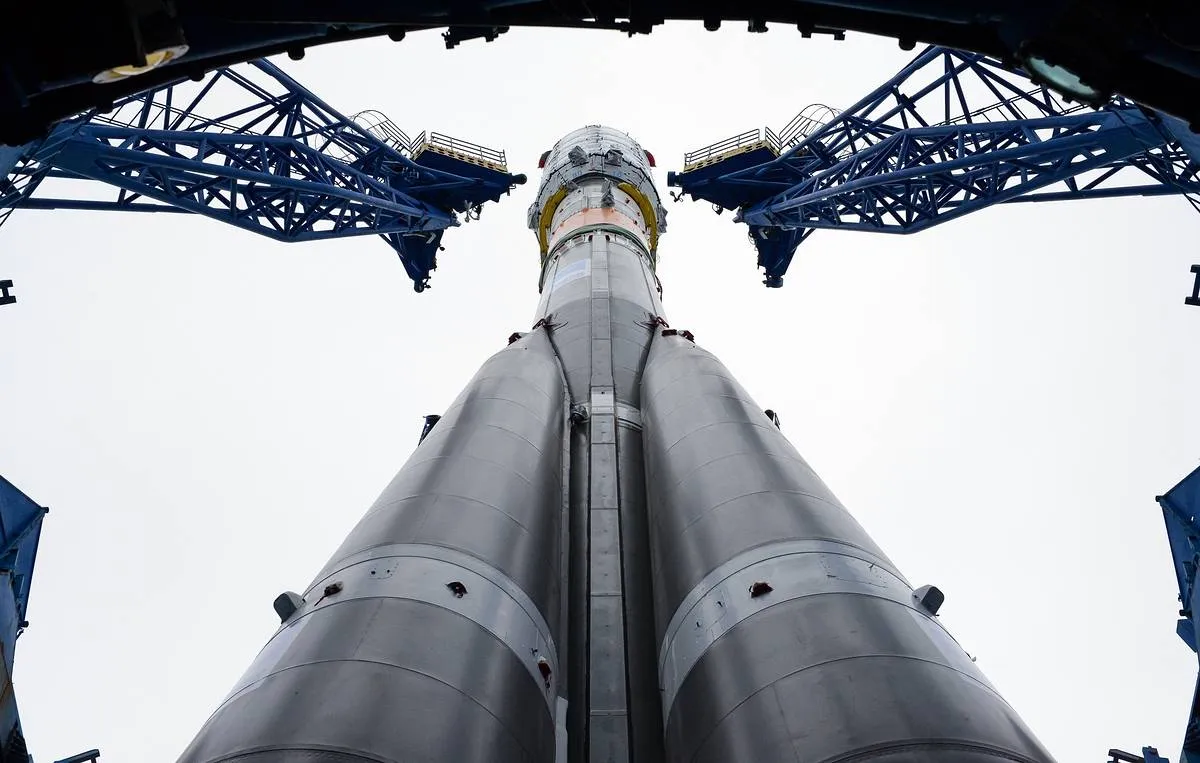
Bureau 1440 launched 16 more Rassvet satellites on a Soyuz-2-1b from Plesetsk's Site 43 Pad 4 on July 19, per RussianSpaceWeb, confirmed by TASS. The satellites separated from the launch vehicle and established contact with the company's mission control, entering a near-polar orbit at roughly 83 degrees inclination. RussianSpaceWeb's updated tracking, citing U.S. Space Force catalog data, now reports that as of early August only nine of the 16 satellites have begun altitude-raising maneuvers, reaching 313-332 km, about 200 km lower than the first batch's satellites had reached at the same point after their own launch; the site says the rest of the second batch are either losing altitude without maneuvering or maneuvering too weakly to counteract atmospheric drag. RussianSpaceWeb's Anatoly Zak reported August 24 that three of the second batch's satellites have since abandoned their climb attempts, with orbits decaying to 310-330 km, and a pair that never maneuvered is on track for reentry; he said two more satellites are about to be lost to atmospheric drag, while the rest of the batch continues struggling to reach a stable orbit. The Institute for the Study of War reported September 1, citing satellite tracking data, that none of the second batch's 16 satellites had reached the constellation's planned 550 km operational altitude as of August 31; most remained between 300 and 400 km, well short of the intended altitude, with at least two continuing to lose altitude toward reentry, per Euromaidan Press and Newsweek. ISW assessed that only about 37.5 percent of all Rassvet satellites launched in 2026 have reached sustainable orbits, and that Russia's dependence on the limited-cadence Soyuz-2.1b rocket will keep it from fielding the hundreds of satellites Ukrainian officials say are needed for stable, round-the-clock coverage over Ukraine in the near term, per Newsweek.
why it matters
This is only the second operational batch for Rassvet, a domestic Russian broadband constellation pitched as a Starlink alternative; moving from a single 16-satellite batch to a second confirmed Bureau 1440 was moving into repeat production and launch cadence rather than one-off testing, a threshold non-US megaconstellation programs are increasingly clearing alongside China's Qianfan and Guowang buildouts. But the slow, partial orbit-raising in this second batch echoes the manufacturing-linked engine fault that caused one satellite from the first batch to reenter in June, raising the question of whether Bureau 1440 has a repeat production or propulsion quality problem just as it tries to scale beyond single-digit batches. ISW's September assessment that essentially the entire second batch has failed to reach operational altitude sharpens that question into a pattern rather than a one-off, and underscores how far Russia remains from the hundreds of working satellites its own officials say stable Ukraine coverage requires.
signal-to-noise
quick facts
- Companies
- Bureau 1440
- Category
- constellation
- Impact
- notable
- SNR
- 4 / 5
- Event date
- 2026-07-19
- Published
- 2026-07-21 05:33 UTC