NASA confirms Artemis II heat shield performed without Artemis I's erosion
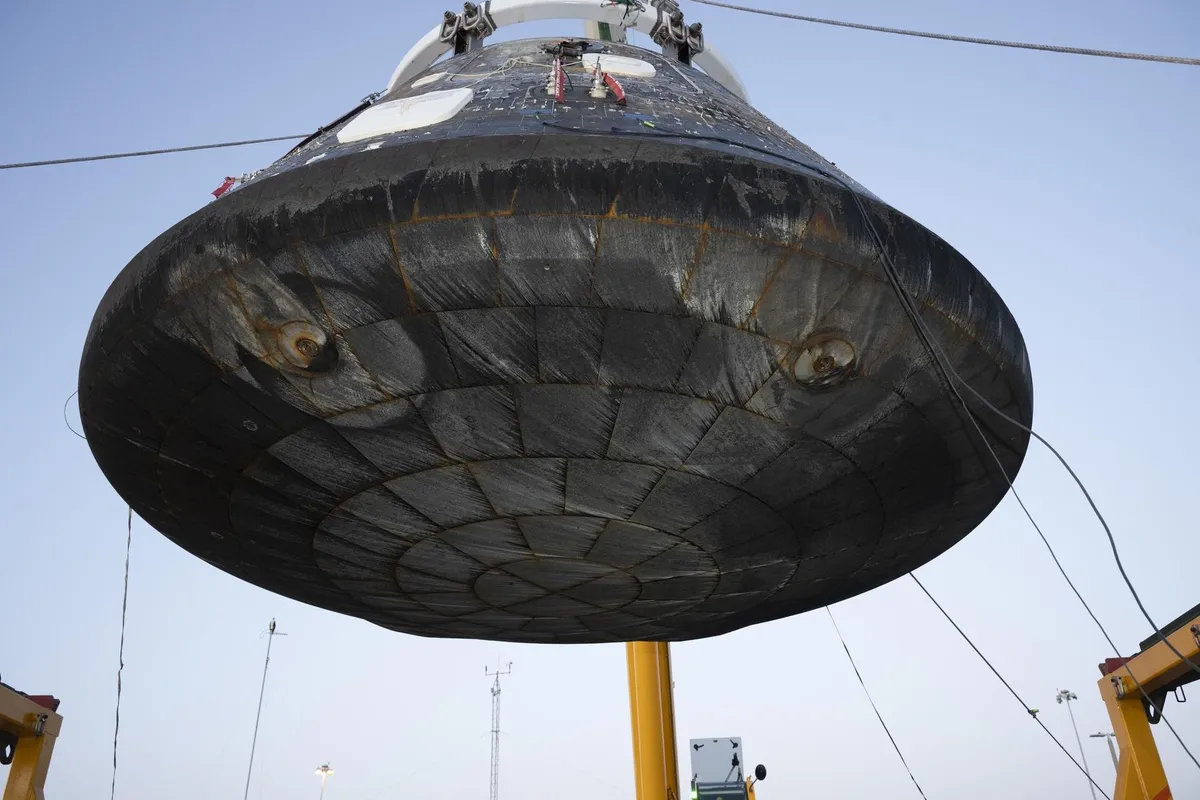
Engineers counted nine char-loss spots on Artemis II's heat shield, a tenfold drop from 103 on Artemis I, after a shorter reentry.
what happened
NASA said October 15 that detailed engineering analysis confirmed the Orion spacecraft's heat shield performed as expected during Artemis II's April 10 splashdown, without the cracking and char loss seen on Artemis I. Engineers counted nine spots of char loss on the Artemis II heat shield, versus 103 on Artemis I, a tenfold reduction NASA attributes to shortening the maximum downrange distance Orion could fly during reentry, which reduced the time the heat shield spent in the temperature range that caused Artemis I's internal gas-pressure buildup and cracking. Orion reentered within 192 feet of its target atmospheric interface point and splashed down 0.59 miles from the predicted site while traveling 39 times the speed of sound, with the external heat shield exceeding 4,000 degrees Fahrenheit while the cabin stayed in the mid-70s. For Artemis III, NASA says it has upgraded the heat shield's Avcoat material for more uniform, consistent permeability to further reduce internal pressure buildup during entry.
why it matters
The Artemis I heat shield's unexpected char loss was a multi-year open question hanging over the program's crewed-reentry plans. This is NASA's first full confirmation that the fix worked on an actual crewed flight, clearing a safety question that stood between the agency and Artemis III, which NASA has already said is running behind schedule.
signal-to-noise
quick facts
- Companies
- NASA
- Category
- human spaceflight
- Impact
- notable
- SNR
- 5 / 5
- Event date
- 2026-10-15
- Published
- 2026-10-21 05:33 UTC