SpaceX launches Northrop Grumman's Mission Robotic Vehicle to extend satellite life
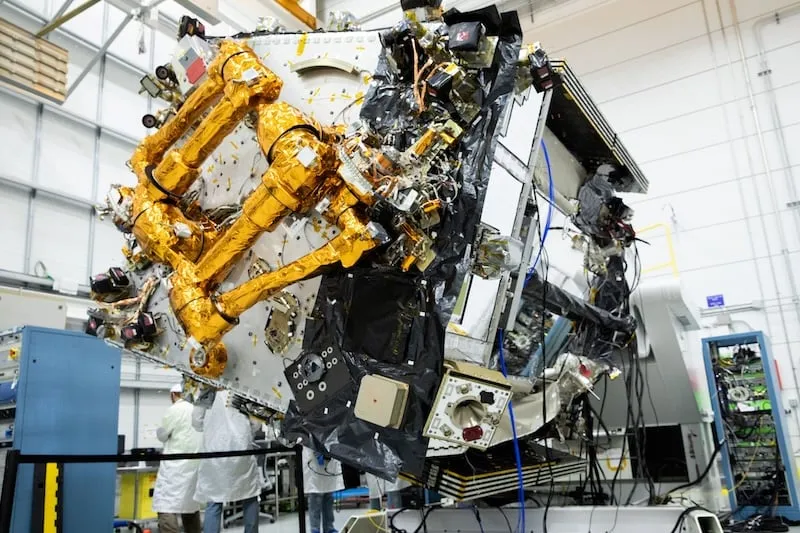
Northrop's Mission Robotic Vehicle launched on a Falcon 9, the first US multi-client GEO satellite-servicing spacecraft.
what happened
SpaceX launched Northrop Grumman's Mission Robotic Vehicle (MRV-1) and three Mission Extension Pods on a Falcon 9 from Cape Canaveral on July 21 at 5:15 p.m. EDT, per SpaceNews and Via Satellite. The Falcon 9 first stage was expended to reach geostationary transfer orbit. MRV-1, built by Northrop's SpaceLogistics subsidiary with robotic arms developed by the Naval Research Laboratory, will attach the Mission Extension Pods to client satellites in geostationary orbit to extend their operational life by up to six years; SpacePolicyOnline's Marcia Smith reported servicing operations are not expected to begin until 2027.
why it matters
MRV-1 is billed as the first US multi-mission robotic servicer, moving beyond SpaceLogistics' earlier one-off Mission Extension Vehicle dockings toward a repeatable, modular satellite life-extension service for GEO fleet operators. A successful on-orbit demonstration would give commercial satellite operators a first commercial alternative to retiring aging GEO spacecraft.
signal-to-noise
quick facts
- Companies
- Northrop Grumman, SpaceX
- Category
- launch
- Impact
- major
- SNR
- 4 / 5
- Event date
- 2026-07-14
- Published
- 2026-07-14 17:37 UTC