SpaceX flies Starship Flight 13, deploys first V3 Starlink satellites
Flight 13 flew: Starship's first intact splashdown, first V3 Starlink deployment, and a hard Super Heavy booster landing.
- [1]trade pressspacenews.com↗
- [2]trade press · corroborationspace.com↗
- [3]trade press · corroborationteslarati.com↗
- [4]trade press · corroborationspacenews.com↗
- [5]trade press · corroborationspaceflightnow.com↗
- [6]trade press · corroborationnasaspaceflight.com↗
- [7]trade press · corroborationteslarati.com↗
- [8]trade press · corroborationteslanorth.com↗
- [9]trade press · corroborationspace.com↗
- [10]mainstream press · corroborationarstechnica.com↗
- [11]mainstream press · corroborationabc.net.au↗
what happened
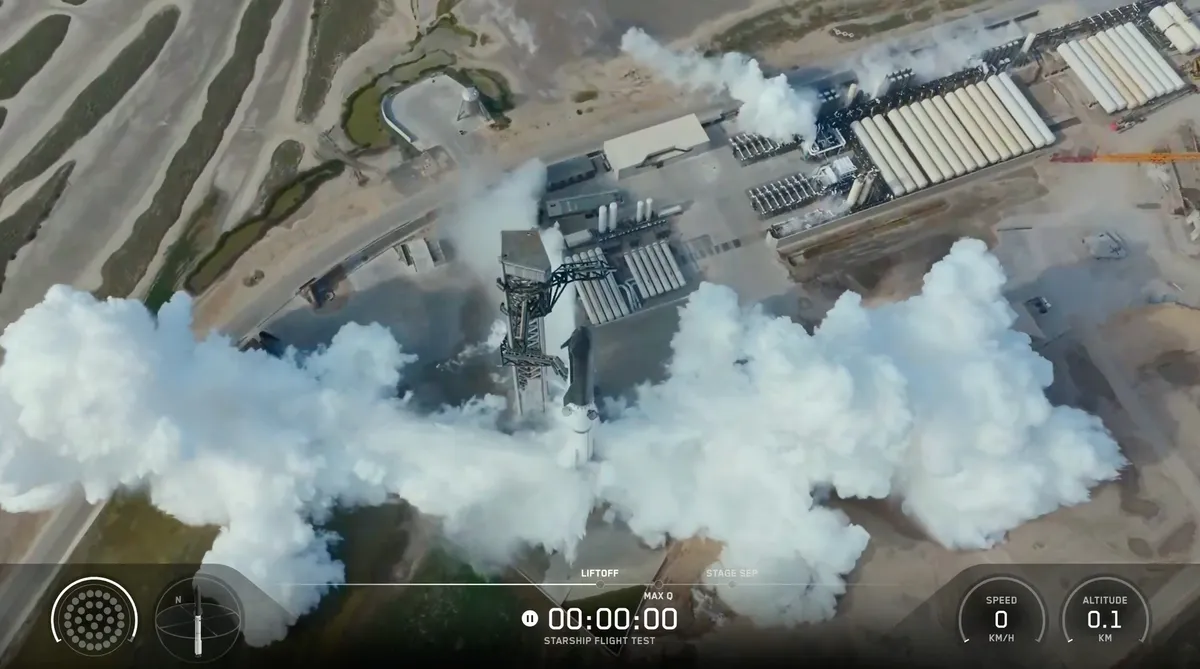
SpaceX flew Starship Flight 13 on July 24, after the July 16 T-0 abort and a further slip past the July 20 target, per SpaceNews and Spaceflight Now. The Super Heavy booster suffered a hard splashdown in the Gulf of Mexico after only 10 of 13 engines needed for the landing burn restarted, and just five were still firing at splashdown; the Starship upper stage completed its reentry and splashed down intact in the Indian Ocean about 65 minutes after liftoff, which SpaceX said was the first time a Starship has remained intact after splashdown. The flight deployed 20 production Starlink V3 satellites through the ship's payload dispenser for the first time, with six of the satellites carrying cameras to inspect the heat shield. SpaceX dispatched a recovery team to retrieve the still-floating Ship 40 from the Indian Ocean, and mission data confirmed the splashdown was precise enough that the tower's arms could have caught it, per NASASpaceflight and Teslarati. Elon Musk said on X that, barring problems found in the data review, SpaceX will attempt to catch the ship with the launch tower on Starship's next flight, Flight 14, the first attempt to catch the vehicle's upper stage rather than its booster. Recovery vessels Go Australis, Normand Ranger and Skimmer Tide spent more than a week towing the intact Ship 40 toward shore, but worsening seas in the Indian Ocean complicated the tow; Musk said on X on August 7 that "ship recovery is not looking good right now," adding that the team obtained close-up photos of the heat shield and engines before conditions worsened, per TeslaNorth. By Aug. 18, recovery vessels had towed Ship 40 through calmer seas to just offshore Christmas Island, an Australian territory in the Indian Ocean; SpaceX said a team of engineers was traveling to the island to conduct further inspection of the vehicle before attempting to return it to Starbase, per Space.com and Ars Technica. On Aug. 24, the semi-submersible heavy-lift carrier Forte docked at Christmas Island's Flying Fish Cove and began loading Ship 40 directly from the water for the roughly 17,000-kilometer voyage back to Starbase, Texas, for engineering analysis, per ABC News Australia.
why it matters
The intact ship splashdown and the first in-flight V3 satellite deployment are the two milestones SpaceX needed to demonstrate before Starship can take on a real Starlink deployment role; the booster's hard landing shows the newest Super Heavy block still has reliability problems to resolve before routine catch-and-reuse. It is also SpaceX's most closely watched Starship test since its June IPO, one investors and existing Starlink customers are tracking for signs the vehicle is nearing operational service. A successful tower catch of the ship, never attempted before, would let SpaceX skip ocean recovery and refurbish ships for reflight faster, a step toward the cadence Starship needs to support both Starlink deployment and NASA's HLS lunar lander contract.
signal-to-noise
quick facts
- Companies
- SpaceX
- Category
- launch
- Impact
- notable
- SNR
- 4 / 5
- Event date
- 2026-07-16
- Published
- 2026-07-17 07:20 UTC