White House sets 1,000-launch-a-year goal in new national space policy
regulatory
The White House sets a 1,000-launch-a-year goal and the FAA opens two implementation RFIs with an Oct. 26 comment deadline.
- [1]official recordwhitehouse.gov↗
- [2]official record · corroborationspace.commerce.gov↗
- [3]signals list · corroborationspacepolicyonline.com↗
- [4]trade press · corroborationspacenews.com↗
- [5]informal · corroborationit-boltwise.de↗
- [6]trade press · corroborationpayloadspace.com↗
- [7]official record · corroborationfederalregister.gov↗
what happened
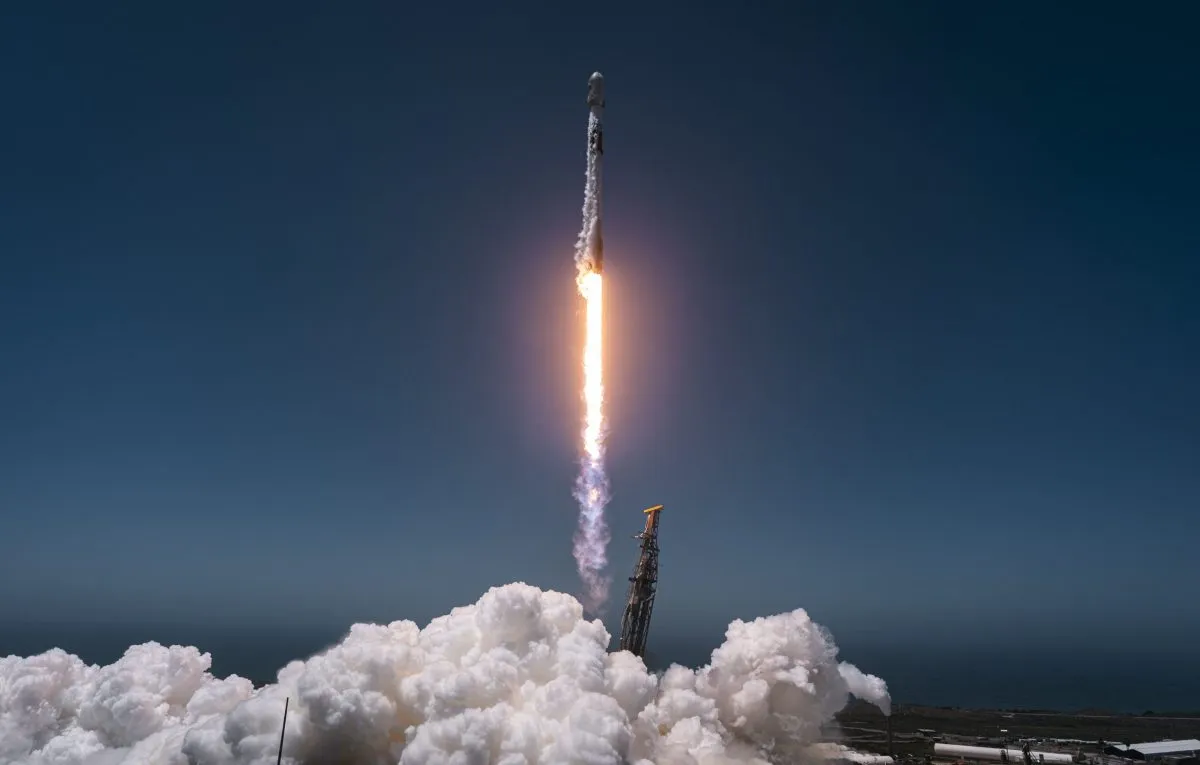
President Trump signed National Security Presidential Memorandum 17, the National Space Transportation Policy, on Aug. 20, superseding the 2013 policy (Presidential Policy Directive 26), per the White House fact sheet and the Office of Space Commerce. The policy sets a goal of enabling more than 1,000 launches and reentries per year by 2030, up from 178 U.S. orbital launch attempts in 2025 per Reuters. It directs agencies to expedite permitting and environmental reviews, identify additional federal land for launch and reentry sites, designate priority airspace for launch corridors, ensure reliable spectrum access for launch and reentry activities, and refrain from government space transportation activities that "preclude, discourage, or compete with" commercial space transportation activities unless required for public safety or national security, per the White House fact sheet. For national-security "space superiority" missions, the policy also requires the ability to launch within 48 hours and directs the Department of Transportation to fold launch into its air-traffic-control modernization effort, per Payload; deliverables from agencies are due to the White House within 60 to 240 days. The FAA followed up by opening two requests for public and industry input implementing the policy: one on where to site new spaceports and why some existing ones are underused, and one on how to designate "priority airspace" for launch corridors, both under docket FAA-2026-9736 with written comments due by Oct. 26, 2026, per the Federal Register.
why it matters
The policy commits agencies to prioritize commercial providers for infrastructure co-development, permitting, and range access over the next several years, giving launch providers and spaceport developers a federal directive to cite when pressing for faster site approvals, land access, and spectrum. Directing agencies to avoid government space transportation activities that compete with commercial ones is a notable signal for any operator competing against a government-run alternative.
for who
Launch providers, spaceport developers
signal-to-noise
quick facts
- Companies
- none listed
- Category
- regulatory
- Impact
- major
- SNR
- 5 / 5
- Event date
- 2026-08-20
- Published
- 2026-08-21 05:32 UTC