NASA powers on Roman Space Telescope's main science instrument
NASA · BAE Systems · Teledyne
The Wide Field Instrument's 18 infrared detectors switched on and returned first test data as Roman heads to L2.
what happened
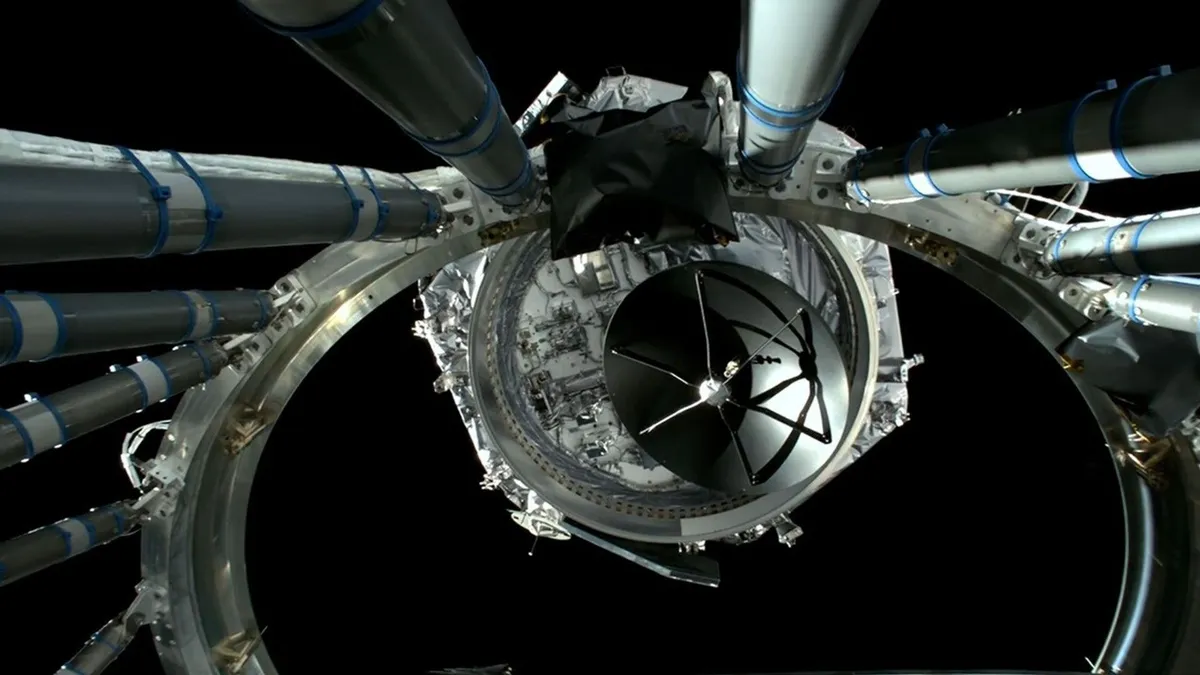
NASA activated the Nancy Grace Roman Space Telescope's Wide Field Instrument, a 300-megapixel infrared camera, cooling its 18 detectors to about -300°F and running calibration, test-data, element-wheel, and focus-mechanism checks between September 11-13. The Coronagraph Instrument separately completed an initial checkout confirming communication with all components and thermal control at 72°F. NASA says the WFI showed nominal readings and "confirmation that it functions in space," per Goddard scientist Josh Schlieder.
why it matters
Roman, launched August 30 on a three-month transit to L2, still needs about a month more of calibration before science operations begin in early 2027. A clean instrument power-on this early reduces schedule risk for a mission whose wide-field infrared surveys will be a reference dataset for the commercial EO and astronomy-instrument supply chain (BAE Systems built the spacecraft bus, Teledyne supplied WFI detector electronics).
signal-to-noise
quick facts
- Companies
- NASA, BAE Systems, Teledyne
- Category
- science
- Impact
- noise
- SNR
- 5 / 5
- Event date
- 2026-09-15
- Published
- 2026-09-16 21:54 UTC