ESA picks ICEYE and Leonardo-led teams to design Europe's EO governmental service
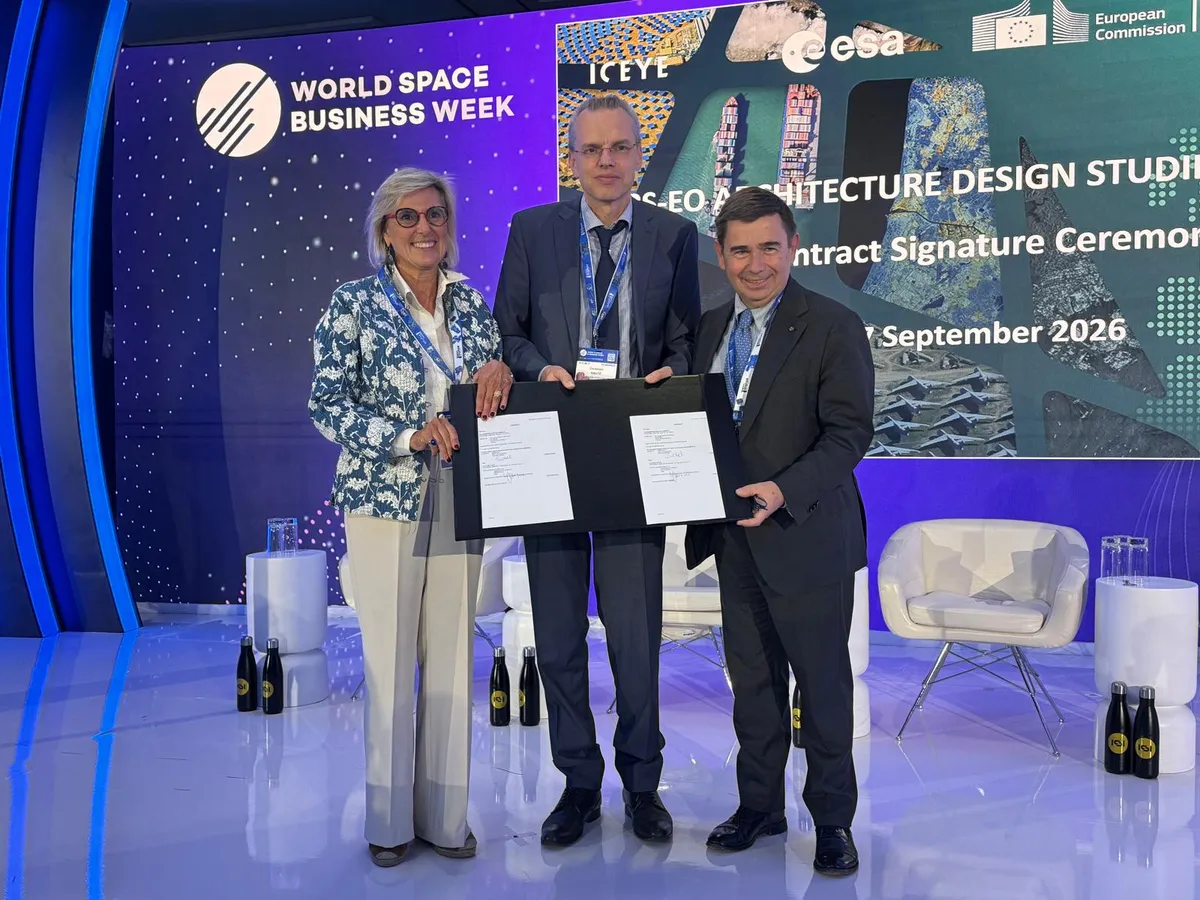
ESA awarded two parallel architecture-study contracts for the EU's future Earth Observation Governmental Service.
updates
- 2026-09-24ICEYE CEO and co-founder Rafal Modrzewski said, per Via Satellite, "Europe cannot defend what it cannot see," calling the study "the first step toward a federated system of interoperable sovereign space capabilities." ESA is now asking p...
- 2026-09-18ESA awarded two contracts, one to a consortium led by ICEYE called ARISE (with Indra Space, Rheinmetall, HISDESAT, Starion, T-Systems, SafranAI, Rheinmetall ICEYE Space Solutions, Creotech Instruments and CTI Aeroespacial as the core tea...
what happened
ESA awarded two contracts, one to a consortium led by ICEYE called ARISE (with Indra Space, Rheinmetall, HISDESAT, Starion, T-Systems, SafranAI, Rheinmetall ICEYE Space Solutions, Creotech Instruments and CTI Aeroespacial as the core team, supported by FSO Instruments, OroraTech, and Unseenlabs) and one to a consortium led by Leonardo (with Telespazio, Thales Alenia Space, e-GEOS, OHB and others), to run parallel architecture studies for the EU's future Earth Observation Governmental Service (EOGS) over roughly 20 months. The contracts are funded by the European Commission under Element 1 of ESA's European Resilience from Space for Earth Observation programme, decided at the November 2025 Ministerial Council. ICEYE CEO and co-founder Rafal Modrzewski said, per Via Satellite, "Europe cannot defend what it cannot see," calling the study "the first step toward a federated system of interoperable sovereign space capabilities." ESA is now asking participating governments to raise their funding commitment for the underlying European Resilience from Space-Earth Observation initiative from 167 million euros to 350 million euros ahead of a Nov. 30 deadline for governments to submit final subscription amounts, per SatNews and Space Intel Report.
why it matters
EOGS is meant to federate national, institutional and commercial EO capabilities into one sovereign European service, so the two competing architecture studies effectively pit ICEYE's commercial-SAR-led coalition against the incumbent Leonardo/Telespazio/Thales Alenia/OHB axis for design influence over Europe's future governmental EO buying. Neither contract yet commits ESA to a build, but the study outcomes will shape which industrial model Europe standardizes on.