Google plans first orbital test of AI chips under Project Suncatcher
Google · Planet Labs
Google's Project Suncatcher prototype launched Oct. 1 and has established initial contact, Planet says.
updates
- 2026-10-01score 4 → 5Planet's own release confirms Project Suncatcher launched Oct. 1 on Transporter-18 and has established initial contact, upgrading the item's lead to Planet's first-party page.
what happened
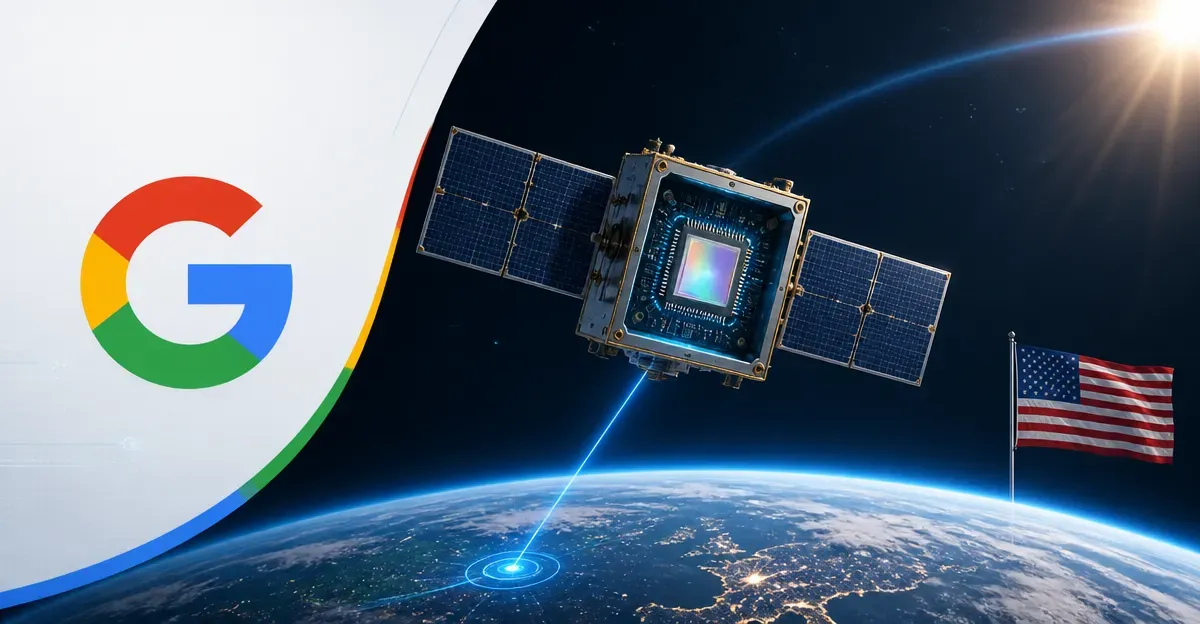
Planet Labs said Oct. 1 that SpaceX's Transporter-18 rideshare mission launched the Project Suncatcher prototype it built with Google, alongside Planet's own Tanager-2 hyperspectral satellite and 18 SuperDoves, from Vandenberg Space Force Base. Planet said it has established initial contact with Tanager-2, the Suncatcher prototype and two of the SuperDoves, with commissioning underway; the remaining 16 SuperDoves deploy via a D-Orbit ION orbital transfer vehicle. The satellite carries four Google Trillium TPUs drawing about 1 kW of solar power to run short bursts of Gemini queries in orbit, testing how the chips handle launch stress, radiation and thermal extremes.
why it matters
Project Suncatcher is Google's early-stage bet that solar-powered satellite clusters could eventually host large-scale AI compute, an idea that puts it in the same speculative orbital-computing space as SpaceX's Starmind constellation plans. For launch and rideshare providers, a second major tech company testing compute hardware in orbit is a data point that the market for flying non-traditional payloads on rideshare missions keeps widening beyond satellites built by space companies; Google has separately estimated it would take roughly 1,800 Starship launches' worth of hardware to make space-based data centers viable at scale, per TechCrunch.
signal-to-noise
quick facts
- Companies
- Google, Planet Labs
- Category
- product
- Impact
- notable
- SNR
- 5 / 5
- Event date
- 2026-09-24
- Published
- 2026-09-24 17:29 UTC