Russia's Cosmos 2612 maneuvers within 1-2 km of ICEYE-X36 satellite
Trackers say Cosmos 2612 has held within 2 km of ICEYE-X36 for over a day, as questions grow over who now operates the satellite.
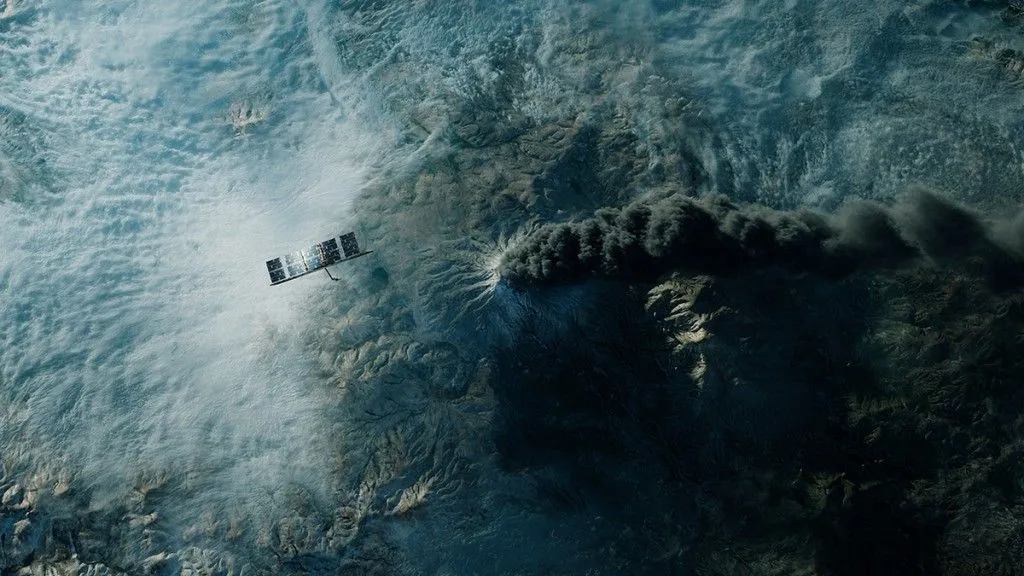
- [1]signals listrussianspaceweb.com↗
- [2]informal · corroborationsattrackcam.blogspot.com↗
- [3]informal · corroborationcsis.org↗
- [4]trade press · corroborationspace24.pl↗
- [5]informal · corroborationbsky.app↗
- [6]signals list · corroborationbsky.app↗
- [7]signals list · corroborationbsky.app↗
- [8]signals list · corroborationbsky.app↗
- [9]informal · corroborationbsky.app↗
- [10]signals list · corroborationbsky.app↗
- [11]signals list · corroborationbsky.app↗
- [12]trade press · corroborationsatellitetoday.com↗
- [13]trade press · corroborationtwz.com↗
- [14]mainstream press · corroborationkrdo.com↗
- [15]signals list · corroborationbsky.app↗
- [16]mainstream press · corroborationtribuneindia.com↗
- [17]mainstream press · corroborationnewsweek.com↗
- [18]mainstream press · corroborationrferl.org↗
updates
- 2026-10-20LeoLabs calls Cosmos 2612's maneuvers the most advanced and potentially dangerous uncooperative proximity operation it has tracked, and trackers say the two satellites have now diverged with no sign ICEYE-X36 was disturbed.
- 2026-10-19Tracker Marco Langbroek says Cosmos 2612 made a further maneuver on Oct. 18 after its earlier orbit raise, writing the shadowing "is clearly not over yet."
- 2026-10-18Trackers say the two satellites have held within about 2 km of each other for over a day, and Langbroek says ICEYE-X36 may now be Ukrainian-operated rather than Finnish.
- 2026-10-18Trackers confirm Cosmos 2612's shadowing of ICEYE-X36 persisted into a third day with no new maneuver detected.
what happened
RussianSpaceWeb's Anatoly Zak reported that Russia's Cosmos 2612, launched April 17, 2026, has maneuvered to synchronize its orbital period, altitude and eccentricity with ICEYE's US-Finnish ICEYE-X36 radar satellite, closing to within one to two kilometers by October 17 after four sister satellites came within 0.5 to 22 kilometers of ICEYE-X36 in May. Delft lecturer Marco Langbroek wrote on his SatTrackCam blog that the latest maneuvers began September 30 and that Cosmos 2612 could pass within meters of ICEYE-X36 in the early hours of October 18. CSIS's Aerospace Security Project, noting a sister satellite, Cosmos 2609, came within 2.5 kilometers of ICEYE-X36 in May, wrote on October 15 that "policymakers should assume Cosmos 2612 could take an action that threatens the commercial satellite"; RussianSpaceWeb describes ICEYE-X36 as providing imagery for Ukraine. Jonathan McDowell of Jonathan's Space Report wrote on Bluesky that "to my knowledge this is the first LEO rendezvous of two active sats where the owner of one of the sats did not give approval." Langbroek wrote on Bluesky on October 17 that the two satellites had already spent more than a day within roughly 2 kilometers of each other, with tracking data projecting the pattern continuing through October 19, and cautioned that the underlying tracking data (TLEs) carry enough intrinsic inaccuracy that a computed "10 meters" could as easily be a kilometer. Langbroek also wrote that ICEYE-X36, while built in Finland, is "like other ICEYE sats whose ownership transferred, no longer Finnish": it is registered in the US but may now be Ukrainian owned or leased. On October 18, Langbroek said Cosmos 2612 made a small orbit raise around 1:52 UTC and was moving away from ICEYE-X36, reaching about 5 kilometers of separation six hours after closest approach; satellite tracker s2a systems separately posted a time-lapse of the two satellites' first pass together that morning over South America. Langbroek wrote Oct. 19 that Cosmos 2612 made another maneuver around 12:26 UTC on October 18, writing "this is clearly not over yet." LeoLabs said the full sequence of maneuvers showed "planning, maneuverability, precise navigation, and significant fuel" and, per The War Zone, called it the most advanced and potentially dangerous uncooperative proximity operation it has tracked; some public tracking data put the closest pass at roughly 26 meters on Oct. 19, though Langbroek cautioned on Bluesky that a specific figure like that carries large uncertainty given the orbital data's inherent imprecision. By Oct. 19, Langbroek wrote that Cosmos 2612 was diverging and that he found no indication ICEYE-X36's own orbit had been disturbed.
why it matters
If Cosmos 2612 disables or damages ICEYE-X36, it would be the first confirmed on-orbit attack on a commercial satellite supporting an active conflict, raising the stakes for any EO operator selling government and defense tasking. ICEYE and its insurers face an immediate question of whether to maneuver the satellite clear, and other SAR and optical operators serving Ukraine or NATO militaries may face the same orbital exposure. McDowell's characterization, that this may be the first non-consensual close rendezvous between two active satellites, underscores why trackers are treating the pattern as a potential precedent-setting event rather than routine proximity; the uncertainty over ICEYE-X36's current ownership (Finnish-built, US-registered, possibly Ukrainian-operated) also complicates any attribution of commercial versus military liability once it is resolved.
for who
SAR/EO operators with government and defense customers; satellite insurers
signal-to-noise
quick facts
- Companies
- ICEYE
- Category
- incident
- Impact
- major
- SNR
- 4 / 5
- Event date
- 2026-10-17
- Published
- 2026-10-17 21:11 UTC