SpaceX declines three Space Force launch bids as Falcon 9 phase-out looms
SpaceX · U.S. Space Force
SpaceX turned down three Space Force launch requests while winding down Falcon 9, and no rival offered to fly them either.
- [1]mainstream pressyahoo.com↗
- [2]trade press · corroborationinsidedefense.com↗
- [3]trade press · corroborationsatnews.com↗
- [4]trade press · corroborationfinance.yahoo.com↗
- [5]trade press · corroborationspacenews.com↗
- [6]trade press · corroborationnewspaceeconomy.ca↗
- [7]mainstream press · corroborationarstechnica.com↗
updates
- 2026-10-30An Ars Technica/Quilty Space analysis finds the launch shortfall could reach 150 missions by 2030, doubling if military demand is included, as Space Force demand forecasts rise sharply and Blue Origin scales New Glenn production.
- 2026-10-25SpaceNews names the specific payload categories (GPS, missile warning, cislunar surveillance, SDA) shifting from Vulcan to SpaceX, while NewSpace Economy clarifies the 'six missions' figure is a cumulative count since April, not a single fresh transfer.
- 2026-10-23Rocket Lab is expanding Electron test capacity to work through a 100-plus launch backlog as the Space Force launch-capacity gap draws investor attention; Neutron still isn't expected before 2027.
what happened
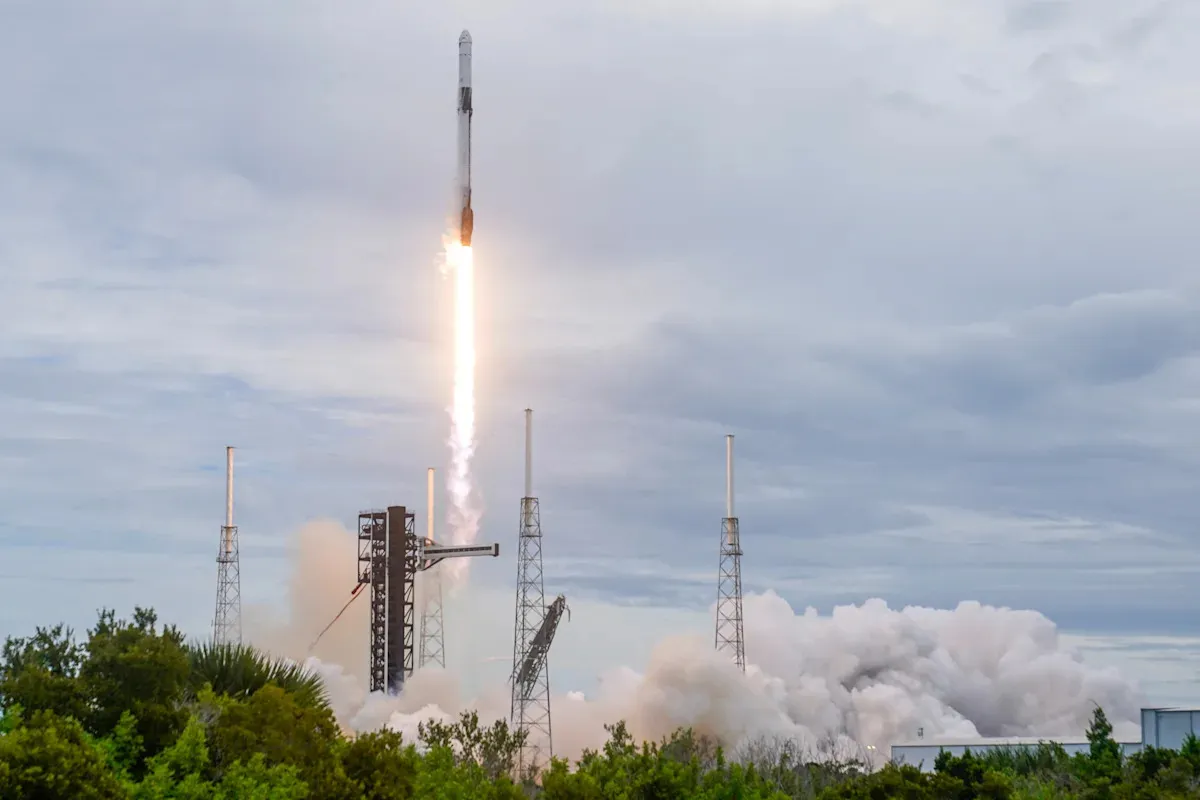
The Space Force sought launch providers for three National Security Space Launch missions, two of them for the Space Development Agency, but SpaceX declined to bid and no other rocket company offered to fly them either, Space Systems Command's Brig. Gen. Eric Zarybnisky said, per Politico. SpaceX is phasing out Falcon 9, which flew 85% of U.S. launches in 2025, to prioritize Starship for its own orbital-data-center and Starlink-shaped payloads. Separately, Space Systems Command has reassigned six National Security Space Launch missions from ULA's grounded Vulcan Centaur to SpaceX's Falcon 9 and Falcon Heavy under a contractual mission-trade mechanism, with ULA to receive later missions once Vulcan is recertified, Lt. Gen. Philip Garrant and Zarybnisky said, per Inside Defense and SatNews. SpaceNews reported October 24 that the missions shifting to SpaceX include three GPS launches, the SDA mission, a next-generation missile-warning satellite, an experimental cislunar surveillance payload stack, and two additional higher-energy missions; NewSpace Economy reported the same day that the "six" figure is a cumulative count of missions moved since the trade mechanism began with a GPS III launch in April, not a single new transfer. Rocket Lab, one of the few domestic alternatives, said it is expanding Electron test capacity to work through a backlog exceeding 100 launches, though its larger, reusable Neutron rocket, delayed by a manufacturing defect, will not debut before 2027; ARK Invest analyst Daniel Maguire said satellite operators needing rides "are all in dire need of getting access to launch," per Investor's Business Daily. An October 30 Ars Technica analysis, citing Quilty Space director of research Caleb Henry, found the launch-capacity shortfall could reach about 150 missions through 2030 and could double if US military demand is included and SpaceX does not extend Falcon 9 and Falcon Heavy; Henry said "the launch crisis is more severe than we thought and ... it might not abate until sometime late in the 2030s." The Space Force has raised its own demand forecasts, to about 170 Lane 1 launches (from 30-60) and 79 Lane 2 launches (from 54), while Blue Origin is forecasting 8 New Glenn launches in 2028, 12 in 2029 and 16 in 2030 and building production capacity for up to 150 upper stages a year.
why it matters
SpaceX's dominance leaves the Pentagon with few fallback launch providers as Falcon 9 winds down and Starship ramps up for flat-stack payloads that most military satellite buses are not built for. Launch providers and satellite primes face a capacity gap right when national-security missions need guaranteed rides, and competitors remain years from matching SpaceX's cadence. The specific payload categories now named, GPS, missile warning, cislunar surveillance and SDA, give subcontractors and bus manufacturers on those programs a concrete manifest to plan against rather than an open-ended question of what moves next.
signal-to-noise
quick facts
- Companies
- SpaceX, U.S. Space Force
- Category
- launch
- Impact
- major
- SNR
- 3 / 5
- Event date
- 2026-10-22
- Published
- 2026-10-22 12:52 UTC