ISRO launches NVS-03, restores NavIC to minimum operational configuration
ISRO's GSLV-F18 launched NVS-03 to restore NavIC; the satellite has now reached its final geosynchronous slot.
updates
- 2026-11-05ISRO confirms NVS-03 completed four orbit-raising maneuvers and reached its final geosynchronous slot in normal health.
what happened
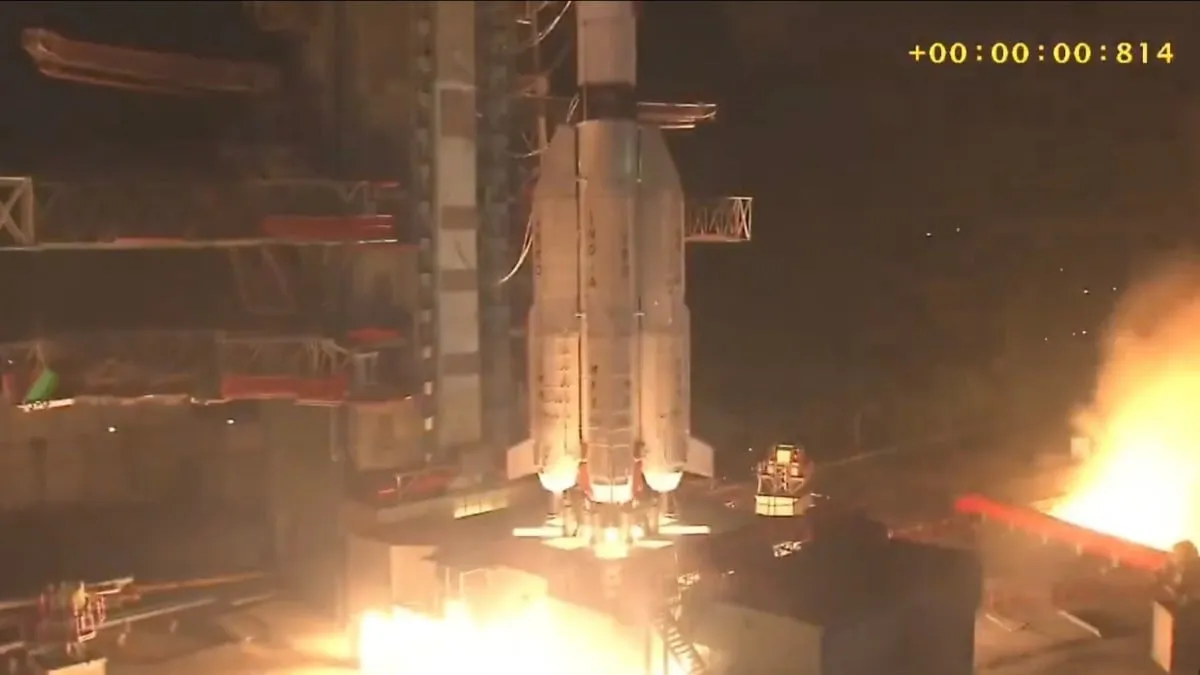
ISRO's GSLV-F18 launched the 2,250-kg NVS-03 navigation satellite from Satish Dhawan Space Centre at 11:51pm IST on October 30 (18:21 UTC), placing it into geosynchronous transfer orbit, per ThePrint. ISRO chairman V Narayanan said "with the success of this launch, the NavIC constellation is restored to the minimum operational configuration with four satellites," and that NVS-03 carries India's third indigenous atomic clock in orbit alongside procured clocks, per ThePrint and Daily Prabhat. ISRO completed four orbit-raising maneuvers, with a cumulative Liquid Apogee Motor burn of 6,164 seconds, placing NVS-03 into its final geosynchronous orbit of 35,765 km by 36,196 km with a 29.98-degree inclination and normal satellite health, per Deccan Chronicle and ISRO's own mission-update page. The previous satellite in the series, NVS-02, was stranded in orbit after its oxidiser valves failed to open during a planned orbit-raising maneuver.
why it matters
NavIC underpins positioning, navigation and timing services India uses across telecom, transport and defense; restoring it to minimum operational strength after the NVS-02 failure matters to any company integrating NavIC chipsets or relying on the system's timing signal. Narayanan separately said the mission's turnaround, 56 days since the previous GSLV flight, was ISRO's fastest yet, a cadence data point for commercial payload customers eyeing GSLV capacity.
signal-to-noise
quick facts
- Companies
- ISRO
- Category
- launch
- Impact
- notable
- SNR
- 4 / 5
- Event date
- 2026-10-30
- Published
- 2026-10-30 22:59 UTC